



What is a dental veneer?
A popular cosmetic dental treatment, a dental veneer is a thin layer of porcelain made to fit over the front surface of a tooth, like a false fingernail fits over a nail. Sometimes, a natural colour ‘composite’ material is used instead of porcelain veneers. This is to create a natural-looking smile free from imperfections, like a slightly crooked, chipped tooth or stained tooth.

What are the advantages of dental veneers?
These custom-made shells make teeth look natural and healthy, and totally unique to you. Because they’re very thin and held in place by a special, strong bond (similar to super glue), very little preparation of the tooth is needed, leaving your natural teeth intact. They can be a quicker, less invasive dental care solution than orthodontic treatments that solve similar problems.
When would I need a dental veneer?
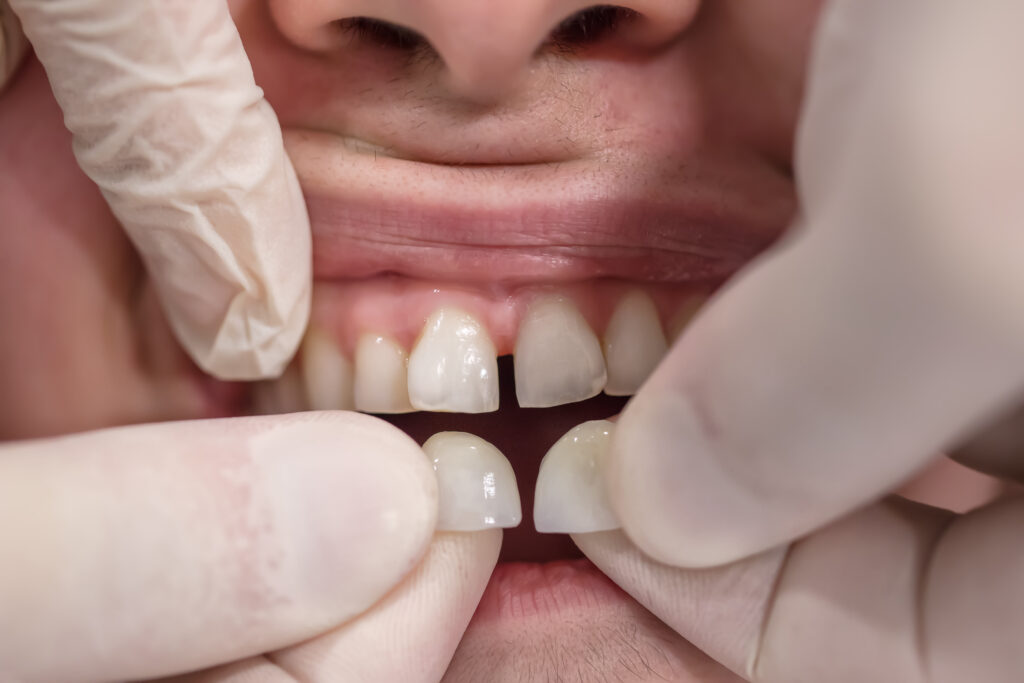
Dental veneers are used to treat numerous cosmetic issues, including the colour, shape and position of teeth. A precise shade of porcelain can be chosen to give the right colour to improve a single discoloured or stained tooth or to lighten front teeth (usually the upper ones). A dental veneer can make minor chips look full again, because the porcelain covers the whole of the front of the tooth with a thicker section, replacing the broken part.
Dental veneers can also be used to close small gaps when orthodontics (braces) are not suitable. If one tooth is slightly out of position, a veneer can sometimes be fitted to bring it into line with the others.
What about alternatives?
What about alternatives?
Veneers aren’t the only way to improve the look of your teeth, and they won’t suit every case. If you only need to fix a small chip or gap, composite bonding is often quicker and less expensive, though it doesn’t last as long as porcelain. If colour is your only concern, teeth whitening alone may do the job.
For teeth that are more heavily damaged or weakened, dental crowns cover the whole tooth rather than just the front surface. And if the main issue is the position of your teeth rather than their shape or colour, Invisalign is worth considering instead.
We’ll talk you through your options at a consultation and recommend whichever treatment suits your teeth, not just the most expensive one.

How long will a dental veneer last?
Dental veneers are considered a very long-lasting element of cosmetic dentistry. With an average lifespan of 10 to 15 years, and some lasting upwards of 20 years with good oral hygiene, the right care and avoiding bad habits, it’s no wonder veneer treatment is proving more popular by the day.
How are teeth prepared for dental veneers in Chelmsford, Essex?
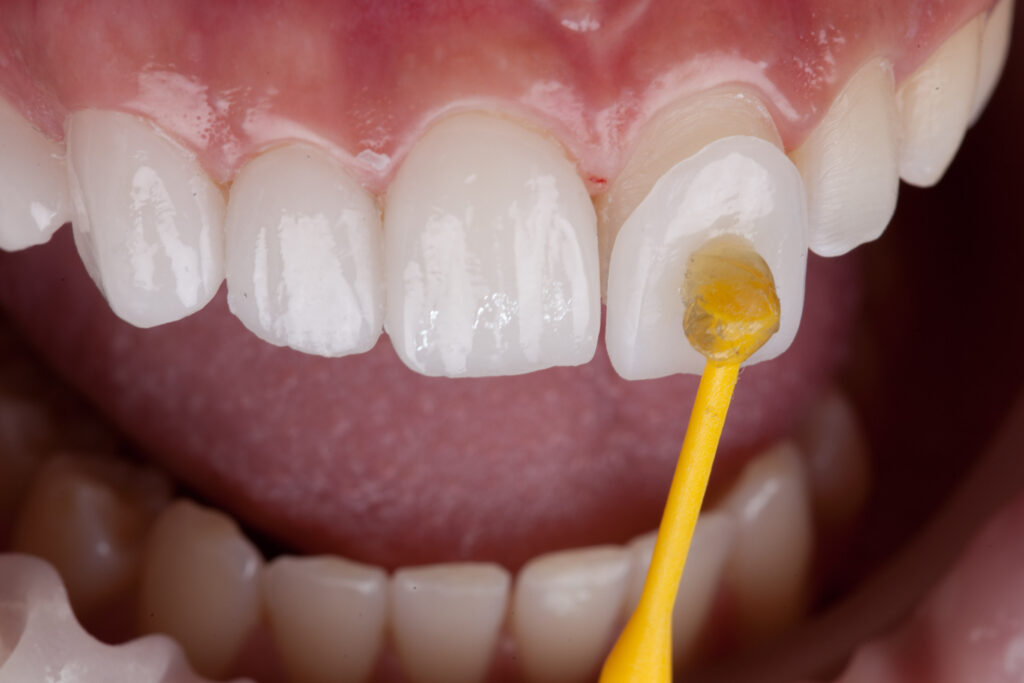
As part of your treatment plan, tooth preparation is required to ensure the veneer bonds properly. A small amount of tooth enamel may need to be removed to make sure that the dental veneer can be bonded permanently in place later. A temporary veneer may be fitted while you wait for your permanent ones to be produced, depending on your personal case. This not only protects the sensitive teeth after prep, but can also give you a much better idea of how your teeth will look once treatment is complete.
The amount of enamel removed is tiny and will be the same as the thickness of the dental veneer to be fitted, so that the tooth stays the same size. A local anaesthetic (injection) may be used to make sure that there is no discomfort, but often this is not necessary. Once the tooth has been prepared, the dentist will take an ‘impression’. This will be given to the dental technician, along with any other information needed to make your dental veneers in Essex at our Chelmsford clinic.
The colour of the surrounding teeth is matched on a shade guide to make sure that the dental veneer will look entirely natural, ensuring patients achieve an undeniably beautiful smile.

How long will it take?
A dental veneer takes at least two visits; the first to prepare the tooth and to match the shade, and the second to fit it. Before bonding it in place, your dentist will show you the dental veneer on your tooth to make sure you are happy with it. Bonding a dental veneer in place is done with a special adhesive, which holds it firmly on the tooth. Here at Advance Dental Clinic, we also offer CEREC veneers, which can be made and fitted within a single visit.


What happens after the dental veneer is fitted?
You may experience some sensitivity once your veneers are fitted, but this is perfectly normal and should subside after a couple of weeks. During this time, it’s best to avoid hard foods or overly hot or cold drinks during this time, so you can be as comfortable as possible.
Only minor adjustments can be made to the dental veneer after it is fitted. It is usually best to wait a little while to get used to it before any changes are made. Your Chelmsford, Essex dentist will probably want to check and polish it a week or so after it is fitted, and to make sure you have the perfect smile and white teeth that you’re happy with.

Before

After

Before

After

Before

After
Veneers Chelmsford FAQs
Are dental veneers expensive?
Dental veneers have various price points, depending on your specific needs. If you’re looking for veneers in Essex, at Advance Dental Clinic we work to ensure you have a package that suits your dental needs precisely. Plus, our amazing finance options allow you to spread the cost of your treatment into more manageable payments, so you can enjoy your new smile without worrying about the cost! If you’d like to find out more about how much veneers cost in Essex at our clinic, get in touch with us today.
Are dental veneers safe?
Absolutely. Veneers are made from durable porcelain material, so they're built to last. They're also fully biocompatible, meaning your teeth and gums won't try to reject them or suffer an allergic reaction. The bonding agent used during the application process is also perfectly safe and won't harm your existing teeth in any way. If you're a naturally nervous patient or if you have any questions about dental veneers, feel free to speak to one of our team members who'd be happy to help.
Will my teeth hurt after having dental veneers?
You may experience some mild gum and tooth pain in the weeks following the application of your veneers in Essex at our clinic, but this is perfectly normal. You may also experience some sensitivity to hot and/or cold food and drink. Again, this is nothing to worry about and will fade with time. The main thing you may notice is that your mouth and teeth feel slightly different than before, but you’ll soon adjust to this. Eventually, you won’t even notice it!
Can dental veneers be removed?
Dental veneers can be removed, but there shouldn’t be any need for this. Our expert dentists make sure your individually tailored veneers are fitted carefully and properly the first time at Advance Dental, so you won’t need to come back for more treatments. But if you have any queries about this, feel free to speak to one of our dentists who will answer any questions you have about the veneers process.
What is the difference between dental veneers and composite bonding?
Dental veneers are custom-made shells that fit over your teeth, improving their overall appearance. Composite bonding, on the other hand, uses a composite resin that's applied directly to your tooth and smoothed over to match the look of your existing teeth. Both composite bonding and veneers can be used in place of teeth whitening, but are generally used to treat more complex dental issues. If you're wondering whether composite bonding or dental veneers are your ideal solution, speak to the team at Advance Dental. Your dentist will examine your case and determine whether you're a suitable candidate for either treatment.